


Normal people should not get their inspiration from athletes. It’s like getting beauty tips from a Victoria Secret’s model. Or wealth advice from a trust-fund kid.
There is not one elite athlete in any of the major sports (Pickleball, Cornhole, and Axe Throwing do not count) who don’t have some genetic trait that makes them specifically good at what they do.
Almost all Men’s Olympic sprinters average 5’11 in height. This height is the perfect balance between having a good stride length and good stride frequency for running fast at short distances. If you’re too short or too tall, you’ll almost never have a shot sprinting against the best.
The average NBA player has a +4-inch Ape index, which is a person’s wingspan minus their height. The average person’s is 0 inches. Most people don’t have a chance in the NBA, no matter how long they practice their jumper because of this.
Sure, there are outliers. Usain Bolt, the world record holding sprinter, was 6’4. Muggsy Bogues, the shortest ever NBA player, was only 5’3. But Usain Bolt had such explosive hips that he was able to have a similar stride frequency to shorter sprinters despite his taller frame. His height became an advantage. And Muggsy Bogues had a 40-inch vertical and could touch the rim. He was a freak athlete and had incredible court awareness. His height didn’t make him a scoring threat. But his quickness and IQ made him an elite passer.
What these two men lacked in the natural characteristics they should have needed for their sport, they made up for in supernatural characteristics that aligned with their sport.
Normal people don’t even have the natural characteristics, let alone a trait that is perfectly tailored to their desired sport that only they have. The act of looking up to a professional athlete to inspire us forgets that they were literally born to play the sport they play.
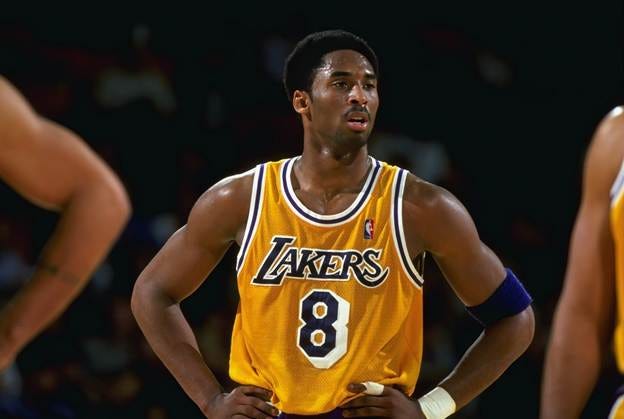
But it’s not like they have nothing to share with us of value. One thing you can learn from some great athletes is work ethic. Kobe Bryant was notorious for his Mamba Mentality. He was not a particularly elite athlete (when compared to the freakshow that is the NBA), but he did outwork most of his peers. This allowed him to be one of the best players to ever lace up.
Another thing you can learn from athletes is will. Rafael Nadal was famously plagued with foot and knee injuries throughout his career. However, his sheer willpower allowed him to fight through this pain and become second winningest tennis player ever.
However, people should still be weary of these things. We must remember that they are literally playing a sport for their profession. If all you had to do was dribble a basketball and work on your jump shot to make millions of dollars a year, wouldn’t you work hard too?
I’m a very good salsa dancer. I’ve been told I could do it professionally by professional salsa dancers. I have excellent timing and a deep understanding of body movement from being a personal trainer for years. I also work with my hands all day, so my above average dexterity makes me particularly good at the fine finger movements necessary to be a great lead.
If you took away my need to make money, or better yet, paid me millions of dollars to be a professional salsa dancer, I would be in the dance studio for hours a day practicing. I wouldn’t even think about it because I love it. Sure, I would work hard. But I’d be working hard at dancing. That’s hardly something to marvel at.
There’s also very little connection between what it takes to be a professional athlete to what it takes to be successful in a normal career. For me to go from being a good salsa dancer, as I am today, to being a professional would be very simple: practice salsa dancing. There is a clear and obvious linear path for me to get from point A to point B.
Contrast that to my real life and how I actually make money: being a gym owner. To get from the day I started my gym to today, I had to do many nonlinear things for the gym to make money. I had to try raising my pricing, adjusting my business model, focusing more on one type of service versus another, try this idea, try that idea, move locations, and on and on the list goes. None of these were just “practice gym ownership.”
Most people’s lives and jobs are this way. Instead of having one defined path to get better, they need to make many small, sometimes right, and sometimes wrong decisions to become more successful at what they do. There is no clear practice schedule or set of skills they must attain. They have to figure out how to reach their end goal through twists and turns in a dense forest of uncertainty.
And even if they get there, they must define what their end goal is. For a football player, it is simple. Win the Super Bowl. Or, have the most rushing yards in a season. Or both. There are clearly quantifiable metrics that an athlete can use that can guide them to becoming the player that they would like to be.
For me and the rest of us, what is the end goal? Own a franchise of gyms? Only have a few? If you’re a normal person who has a job, what is your “end goal”? What does that even mean to you, if anything at all?
Professional athletes simply do not have the same struggles as the rest of us. Their life is entirely different. Therefore, putting one of their quotes as the background of your computer while you sit at your desk and plug in values into an Excel spreadsheet all day is silly.
If we all had the mindset of a professional athlete, we might actually get stuck doing something we hate. If you’re that person putting the values into Excel all day and you follow Muhammed Ali’s advice of not quitting so that you can live the rest of your life as a champion, you might get yourself stuck at your dead-end computer job that you despise. Sure, working hard is important, but working on the right thing is equally, if not more, important. And no professional athlete can teach you how to do that.
I understand that people find amazing sports stories inspirational. I do too. I’m a sucker for a good sports documentary about the team that nobody said they could who finally went out and did. But I think we should treat these as stories. The same way we treat reading a Jack Reacher novel on a plane as a story. The life of a professional athlete is about as close to our reality as Reacher’s life of bopping from town to town and beating up on all the bad guys without even a scratch on him to show for it.
The only thing worth taking away from sports is what I said at the beginning. All of these elite athletes’ bodies and minds are specifically tailored for them to be one of the best sports that they do. If instead of sports, we swap out professions. What profession is your mind and body specifically tailored to do that you can be one of the best in the world at?